Showing posts with label ferrari. Show all posts

Wednesday, April 28, 2010

1962 Ferrari 250 GTO

The legendary GTO..

Many people will argue that the best car in the world is the Ferrari GTO. While more modern supercars surpass the GTO in terms of performance, none excel better in both form and function. During its heyday, the GTO dominated the World Sports Car championship, and it is still one of the most beautiful shapes ever to grace a Ferrari chassis.

1962 Ferrari 250 GTO 1962 Ferrari 250 GTO

For these reasons, the GTO is one of the most desired and expensive cars. In fact, chassis 3729GT received a high bid of nine million dollars at Bonhams' 1997 Gstaad Auction, but failed to meet its 10 million dollar reserve. Many cars have fetched a higher price privately, but if 3729GT had sold, it would have set the world record price for an automobile at public auction.

So what is all the fuss about? What we have here is probably the greatest road and track car ever made. It combines sexy styling, championship-winning engineering and exclusivity. Only 39 copies exist and all have colorful histories.

GTO Development

For the 1962 manufacturer's championship, focus was switched from sports prototypes to grand touring cars and Ferrari was provided with increased motivation to further develop their 250 GT as much as the rules would allow. They built the 250 Gran Turismo Omologato (GTO), a car named after the homologation process in which it was conceived.

Providing a base for the GTO was the 250 GT chassis. Starting in 1954, with the 250 Europa GT, the engine, chassis and body of the 250 series evolved into a greater product each year. The final development was the GTO and it was bulletproof from the start.

Before the 1962 season, Ferrari assembled a small team led by Giotto Bizzarrini who hacked his old 250 Boano chassis and modified it, in secret, to his own ideas. Fixed to it was a rather crude body which took advantage of a much lower and shorter dry-sump engine. At the front was a smaller and lower fascia that made the old short wheel base (SWB) look like a brick. The rear was reshaped into a sleek fastback design that reduced drag.

Initial test results around Monza showed significant improvements in every area over the SWB Berlinetta and Sperimentale, sometimes called the GTO prototype, that raced at LeMans in 1961.

1962 Ferrari 250 GTO

Before production of the GTO commenced, Bizzarrini and several key people left Ferrari during the famous Palace Revolt. This left Girolamo Gardini to sort out Ferrari's 1962 sports car. Gardini used most of Bizzarrini's modifications from the test car and added a rear spoiler and watts linkage for stability.

At their yearly press conference held February 24th 1962, Ferrari released no fewer than six different racing models and among these versatile race cars was chassis 3223GT, the first production version of the 250 GTO. The series of GTOs that followed would eventually become the most important Ferraris, demanding money, attention and acclaim.

Production GTO

During its launch, many of the press called the GTO 'a Testa Rossa with a roof'. They rightly named it as such since many of the ideas used on the GTO came straight from Ferrari's prototypes. Every aspect of the GTO's engine was upgraded to reflect the 250 Testa Rossa's. Compared to the older Tipo 168, the newer Tipo 168/62 used larger valves, smaller clearances, lighter materials and dry sump lubrication.

Designated type 539/62 Comp, the chassis in the GTO was an evolution of the unit found in the 1961 250 GT Competition. Through years of development, this chassis had become more like a space frame, using a higher number of small bracing tubes. Upgrades to the chassis also included new front brakes, a more adjustable, stiffer suspension and a lower driveline.

Inside, the GTO was very sparse and purposeful. As such, the only covered areas were the thinly clothed seats. No speedometer or odometer was offered, and the only real luxury was the wooden Nardi steering wheel.

GTO in Action

During its first year, GTOs decimated the competition. Thus, Ferrari scored maximum points in 1962 Division III Championship. During the fifth round at Le Mans, GTOs placed second and third overall. This was a remarkable result, and proved that the GTO could beat most cars in the prototype category.

By the end of the first season, Jaguar, Aston Martin and Chevrolet tried to convince the governing body that the GTO was not a GT car. However, Appendix J, Section 254 stated that and modifications introduced after homologation did not disqualify the car if they were a 'normal evolution of the type'. Since the GTO was an 'evolution' of the largely produced 250 GT road car, it was within rules, although the five-speed gearbox and dry sump lubrication were never factory road car options.

The remaining two seasons would prove very successful for the GTO. Ferrari again took the Division III championships in both 1963 and 1964. By the end of the 1964 season, Shelby-led Daytona Cobras were proving their worth and for the first time GTOs were beaten around Le Mans and Sebring.

Beyond 1964, the GTO was stretching its potential. Ferrari was unable to homologate their rear engine 250 LM and instead developed a competition version of the 275 GTB, which really became the '64 GTO. These developments left the hat trick of the division III championships to forever highlight the end of Ferrari's 250 series.

Monday, April 19, 2010

Ferrari Enzo taxi – you must see this!

Better than Malaysia's own Iswara NGV!!!!!!!!

Ferrari Enzo taxi – you must see this!

This Ferrari Enzo taxi can be found somewhere in Oman. Let’s be serious, we all know that Arabians are so damn rich, they have the money needed for chroming a Ferrari but really .. transforming a Ferrari Enzo in a taxi? That is pure madness.

I am really curious to find out how much would a ride cost in this taxi? Here are some Ferrari Enzo specifications:

Price:$643,330
Miles Per Gallon:— mpg
Curb Weight:2767 lbs
Layout:Mid-Engine/RWD
Transmission:6-Speed Semi-Automatic
Engine
Type:V12
Displacement:5998 cc
Horsepower:660 bhp @ 7800 rpm
Torque:472 lb-ft @ 4700 rpm
Redline:8200 rpm
Performance
0-60 mph:3.6 sec
0-100 mph:6.3 sec
Quarter Mile:11 sec @ 130 mph
Skidpad:
Top Speed:217 mph

According to these numbers, you’ll get from work to home faster than anyone!!

Ferrari Enzo vs. McLaren F1

Good article from the man...

Ferrari Enzo vs. McLaren F1

Article about the Ferrari Enzo
By: Michael Sheehan

Comparing the ultimate supercars is much like comparing the various attributes of the world’s top supermodels: It’s all about what fantasy turns your crank, as few of us mere mortals will ever get to test drive the cars or date the models. Those few who own both an Enzo and an F1 will tell you straight–off that the performance level of either car is so high that only professional drivers can explore and compare the limits.


THE CHAMP: MCLAREN F1—Developed by McLaren Cars and designer Gordon Murray, the motivation behind the F1 was to build the best street car ever, regardless of cost. The design goal was to create the highest power–to–weight ratio possible in a user–friendly, roadworthy machine. To this end, the McLaren F1 was the first road car to use a complete carbon fiber chassis and body with lightweight composites and exotic metals throughout. A magnesium–cast BMW engine mated to a very lightweight (and very expensive) transverse gearbox further helped weight savings.

The F1 is surprisingly small on the outside, but it actually seats three people, with two passengers flanking a center–positioned driver. The driving position is difficult to get used to, but it makes for an ideal weight distribution. Appropriately, the first two pages of the owner’s manual are entitled “getting in” and the next two cover “getting out.”

Once you master entry, the McLaren’s controls fall perfectly to hand, with the shifter to the right at four o’clock. The panoramic view from the wrap–around windshield and the gauges’ big, bold numbering on a white background are a study in efficiency. But despite the excellent ergonomics, the McLaren dash layout and shifter feel dated, especially when compared with the cutting–edge styling of the Enzo.

Behind the wheel, the steering and brakes are on the heavy side, but with incredible feedback, as should be expected, while the 6.1–liter V12 gives staggering performance, with torque that never ends, in any gear, at any time. Fifth is absolutely usable from 35 mph all the way up to 210–the push just increases astronomically as the revs rise.

McLaren chose to reject technology like power steering, powerassisted brakes, anti–lock brakes, traction control, and stability control, all well known and accessible at the time by virtue of its relationship with the McLaren Formula One race team. But really, only the ABS is missed–and how–as it takes a top-level racing driver to feather the brakes on this car in the wet or a panic situation. Even so, the savings in weight with all the electronics absent is huge: The F1 weighs a mere 2,500 pounds, vs. 3,230 for the Enzo.

For all that it “lacks,” the car does incorporate active aerodynamics, with a pair of lightweight fans that suck air from diffusers under the car so that no huge rear wing is needed to maintain stability at speed though a small tail spoiler does rise to lend some rear downforce.

Your greatest fear when driving an F1 is that the car is simply so good that it eggs you on to drive faster and faster, entering a performance fantasy land that can bite back when you exceed your own talents.


THE CHALLENGER: FERRARI ENZO—The Enzo is certainly Ferrari’s best effort in the supercar wars to date, but it still comes up second in the running for the fastest car title. Styled by Pininfarina, the Enzo is built to resemble a Formula One racecar, but without McLaren’s hell–bent–for–speed attention to maximizing power–to–weight. The result is that the Enzo tries too hard to merge the design of a road car with an open–wheeled racer, and at least to my eyes, the styling suffers, especially when compared to Ferrari’s previous efforts, the much more attractive F40 and F50.

As is now standard practice in most supercars, the Enzo’s chassis is made of carbon fiber, while the bodywork uses a combination of aluminum and carbon fi ber. Huge air intakes allow the Enzo to generate immense downforce, while a small retractable rear spoiler comes up at speeds in excess of 100 mph. The cab–forward interior sports lots of carbon fiber, a semi–automatic six–speed gearbox, launch control, and a variable damping suspension for luxury cruising.

The Enzo’s 6.0–liter, naturally aspirated V12 can rev to 8,000 rpm, yet 80 percent of its torque comes in at only 3,000. In keeping with the lightweight theme, its V12 is one of the lightest in the world at just 496 pounds. By comparison, the 427–ci engine in the Cobra weighed 680 pounds.

Stocked with all the latest high–tech gizmos adapted from its own F1 racing program, the Enzo is a techie’s dream. Advanced technology like stability control, electronic brake–force distribution, traction control, and ABS keep the car in check, making it more user–friendly than the McLaren. The Enzo also has a driver–controlled, up–down lift in the front, which takes the crunch out of getting in and out of driveways.

THE PERFORMANCE VERDICT—The numbers tell the story: While the stock F1 has a “mere” 627 hp versus the Enzo’s 650, and the McLaren must make do with 479 ftlbs of torque versus the Ferrari’s 485 (not to mention a redline of just 7,500 rpm for the F1 against the Enzo’s 8k limit), its smaller mass puts the McLaren out ahead. The Enzo is a leaden 717 pounds heavier than the F1.

The McLaren goes from 0–60 mph in 3.2 seconds; the Ferrari in 3.5 seconds. The McLaren’s 0–100 mph time is 6.3 seconds, while the Ferrari takes 6.6 seconds. And finally, 0–150 mph in the McLaren takes just 12.8 seconds while the Ferrari is a few tenths back at 13.1.

The Enzo’s front–end aerodynamics and many high–tech gizmos weigh the car down to the point that top speed is only an estimated 218 mph, well below the McLaren’s documented 240 mph. Yes, the F1 is still the fastest road car of all time, even with its decade–old technology.

While the F1’s mid– and high–speed acceleration easily beats the Enzo, a factor of its much lighter weight, all who have driven both cars will agree that the huge, state–of–the–art ceramic disc brakes of the Ferrari easily surpass the McLaren’s steel brakes.

The McLaren F1 was a successful attempt to build the best road car ever, regardless of costs, while the Enzo was always intended to make money for Ferrari, which it most certainly has. This, by its very nature, creates entirely different production criteria: While the build quality of the Enzo is good, the McLaren is simply perfect.

Exclusivity is in the F1’s favor as well, with only 64 road–going cars built, against 399 Enzos (plus six to ten pre–production prototypes that will eventually find their way into private hands). This makes the ultrarich buyer’s odds of meeting anther Enzo on the street versus meeting another F1 a healthy six–to–one, causing the Ferrari to seem almost “common.”

MONEY TALKS—Maintenance costs on both cars are staggering, though doubtless their owners are not concerned with the shop bills. An F1 will need a new clutch every 3,000 to 6,000 miles, at a cool $12,000. Its $25,000 fuel cell needs replacing every five years. A starter motor replacement is a 90–hour job, as the engine has to be removed, and that runs $12,000. Should you break the transverse transaxle, expect a $100k repair bill.

As for the Enzo, they are all still under warranty but soon enough that will change and many Ferrari service managers will go shopping for new luxury boats. Once off warranty, a full brake job with new carbon fiber pads ($2,300 front and $2,100 rear) and rotors ($7,400 each) will be in the $40,000 range, while a new clutch assembly should cost only a modest $6,000.

The ultimate test of the cars is, of course, the market. The first U.S.–spec Enzo sold on the private market brought $1,350,000, but prices have been dropping and the current “ask” is in the $1,150,000 range, while the actual ”sell“ is certainly less. In the next few months, almost every U.S.–spec Enzo is due to pass its one–year, “you–can’t–sell” date imposed by Ferrari, and I personally know of six owners who are planning on putting their cars on the market. This will only further drive down prices.

Only a few McLaren F1s change hands every year, with the last recorded sale at the Christie’s auction in London on Dec. 2, 2003, for $1,257,750. (See English Profile, page 48.) Christie’s sold another F1 for $961,875 on June 16, 2003. While the Enzo may have the market edge as of this moment, the F1 has clearly passed the test of time, and should appreciate, while the Enzo loses value, albeit slowly, for the next ten years or so. In the long haul, the difference in production numbers means the F1 will always be worth more than the Enzo. How much more? At least 25 percent, in my book.

Both the McLaren F1 and Ferrari Enzo are cars few ever see, let alone drive or ride in, not to mention own. While I’m a Ferrari guy at heart, it simply must be said that the F1 is the fastest, most expensive and most exclusive supercar I’ve ever had the opportunity to drive. And either would certainly be welcome in my garage.

Friday, April 16, 2010

Revealed: Ferrari FXX Evoluzione

Ultimate Ferrari

Revealed: Ferrari FXX Evoluzione


click above image to view high-res gallery of the Ferrari FXX Evoluzione


Following earlier reports, Ferrari unveiled a new, modified version of the super-Enzo during this past weekend's Ferrari World Finals at its Mugello race track in Italy. As the name suggests, FXX Evoluzione is a further evolution of the FXX program that places "client test drivers" (i.e. obscenely wealthy Ferrari aficionados playing Schumacher) behind the wheel of developmental test beds to try out new equipment for Ferrari. In fact, Schumacher himself was reportedly on hand to unveil the car, having sporadically participated in the program over the past two years.

The FXX Evoluzione picks up where the "ordinary" FXX program left off, extending the program by an additional two years, based on an even more radical version of the track-only machine. With 35,000 kilometers worth of telemetry from the 20 cars, engineers compiled a series of tweaks to sharpen the car's capabilities. Output is boosted to a staggering 860 HP, redline is up to a shrieking 9,500 rpm, and shift times are down to a lightning-fast 60 milliseconds. The traction control system has been modified to be less invasive, more adaptable and can be adjusted in-cockpit on the fly between nine distinct settings from corner to corner. Suspension geometry has been modified, as has the aerodynamic package, which, along with fresh livery, accounts for a slightly different appearance compared to the previous version.

The result of all these and a few other small modifications (which you can read about in detail in the press release after the jump) means that the FXX Evoluzione can now lap the company's private Fiorano test track two seconds faster than its predecessor at 1 min 16 sec. The kit can be retrofitted to any of the 20 FXXs that took place in the program until now, and includes participation in a renewed program that will take these most extreme machines to two events each in North America, Europe and Asia (for a total of eight track events) each year over the next two years. Money may not be able to buy you happiness, but it can buy you a seat as a Ferrari test driver, which sounds like happiness to us.

Wednesday, April 14, 2010

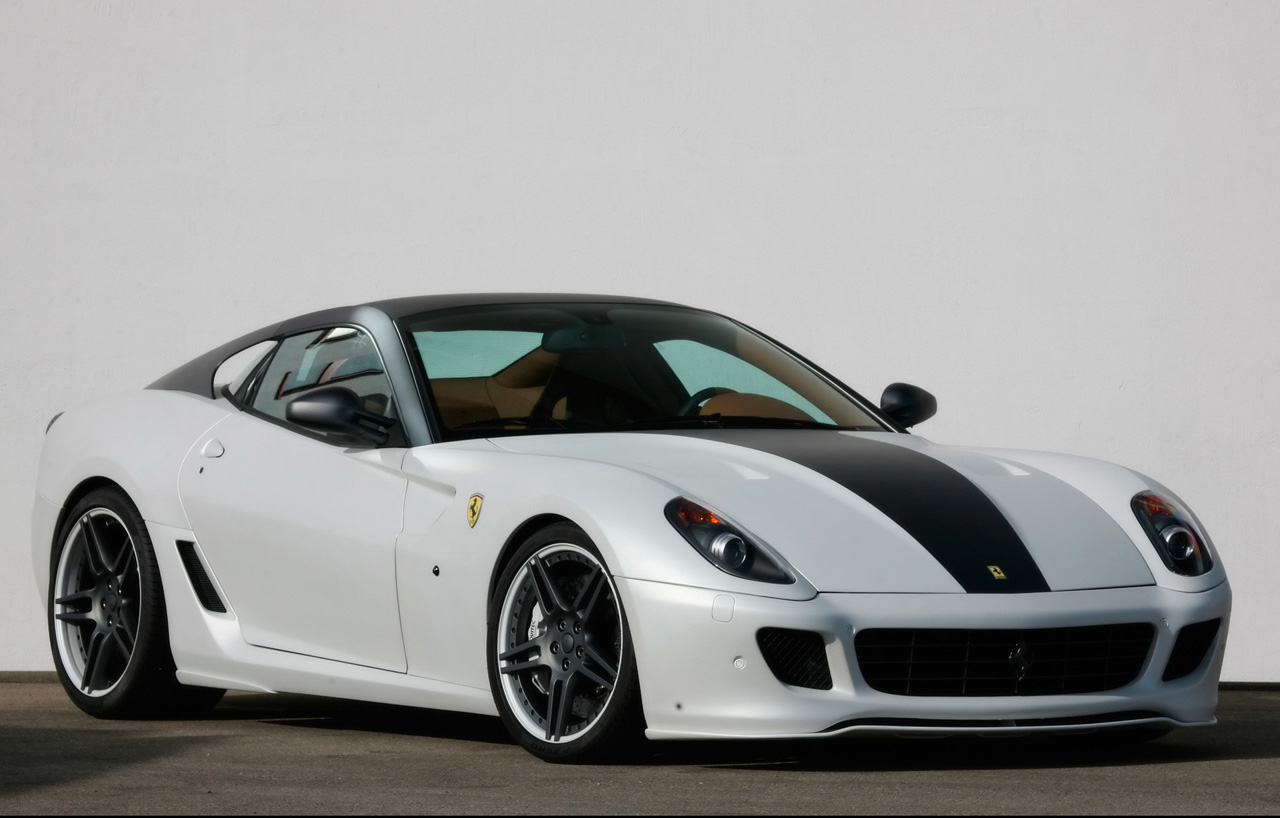
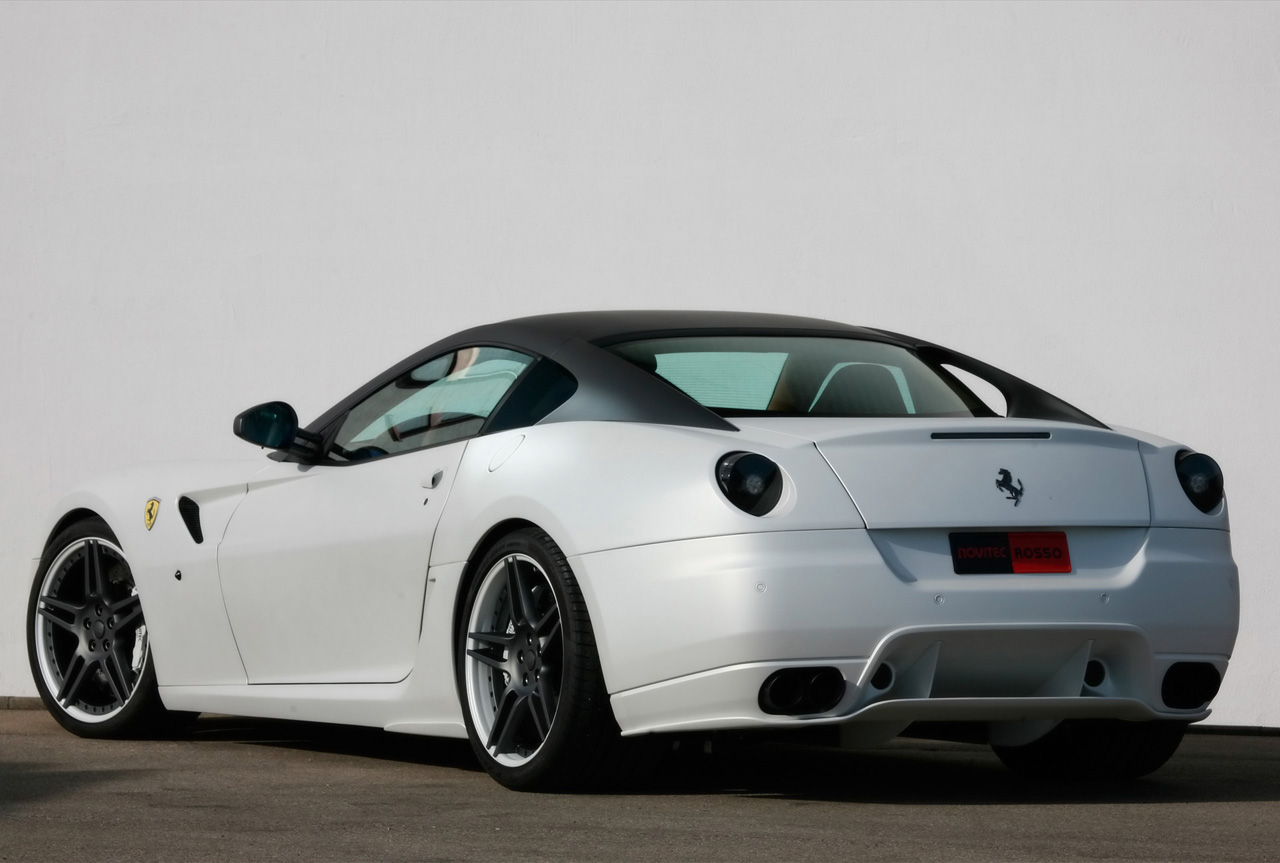
2010 Novitec Rosso Ferrari 599 RACE 848

Hello and welcome to PlanetSupercars, a collection of the best supercars on planet earth. And the first car to be featured is:

2010 Novitec Rosso Ferrari 599 RACE 848

If you’re looking for a high performance sports car that can give you an easy top speed of 345 km/hr, then it shouldn’t be a problem as there are a lot of sports cars that you can choose from. but if you’re looking for something unique that can give you performance, style and pedigree then your best bet would have to be the 2010 Novitec Rosso Race 848. This two-seat car, which was based on the Ferrari 599, embodies luxury and speed like no other car can.

It may not look as striking as its contemporaries, but if you’re going to look under the hood, you will find a V12 engine that enables the car to get to the 100 km/hr mark in just 3.4 seconds. And because it's fitted with and aerodynamically enhanced body kit, you can be sure that you can reach top speed at no trouble at all.

The interior of the Novitec Rosso race 848 can be customized to the owner’s taste, but the one thing that gives this car its sense of exclusivity is the limited edition plaque bearing the car’s own unique serial number. Given that the company has decided to produce only 3 of these marvels, this is one car that is best suited for the most discerning car collector who would want nothing less from a Ferrari.